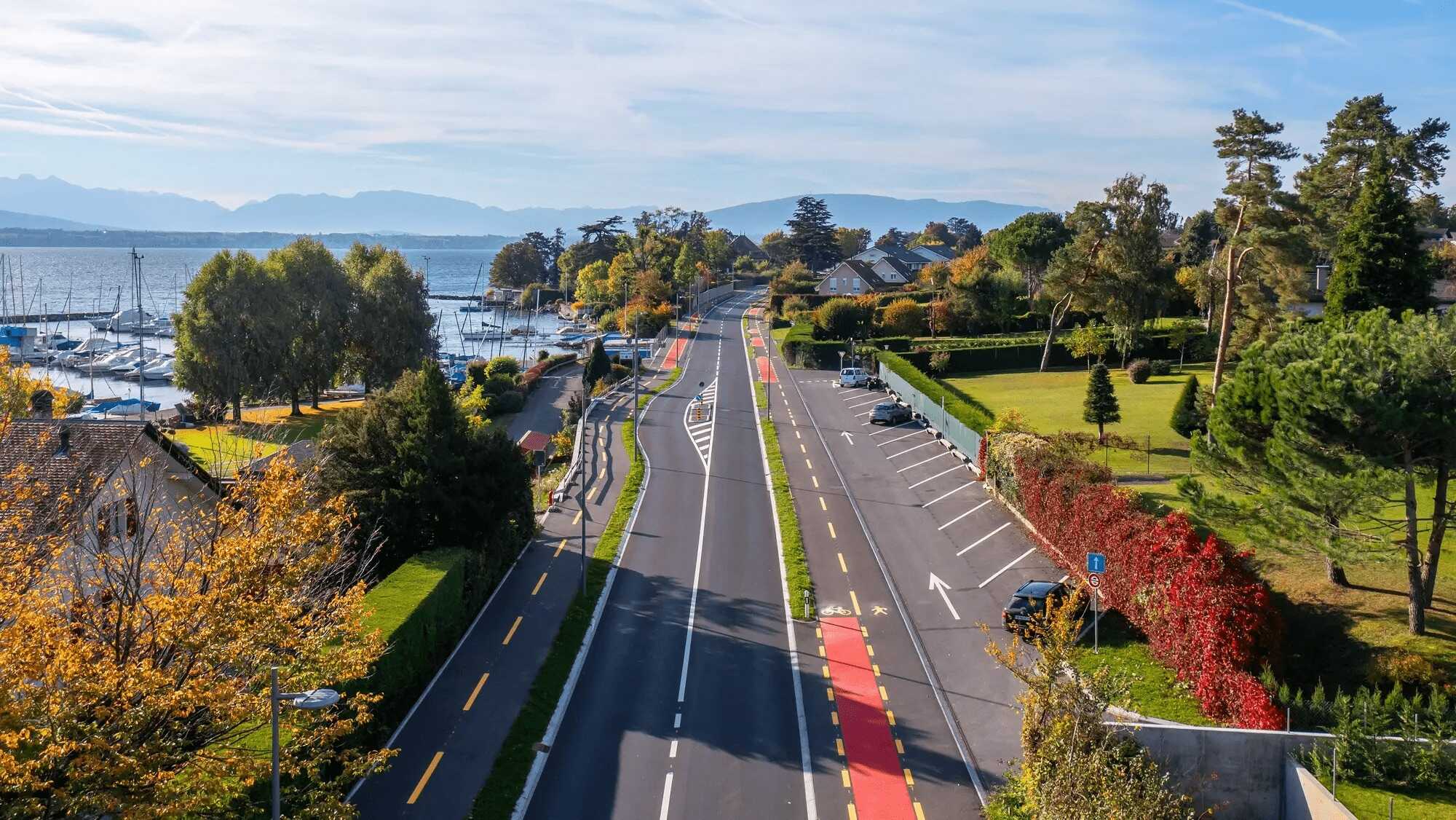
What CSN standards and technical regulations must meet modern traffic surfaces?
What is type I and type II horizontal marking and how to ensure visibility in the rain?
What CSN standards and technical regulations must meet modern traffic surfaces?
Standards: Safety surfaces in the Czech Republic are primarily subject to the standard ČSN EN 1436, which defines requirements for day and night visibility and anti-skid properties.
Regulations: The WeTraffic systems fully comply with the technical conditions TP 70 (Horizontal Traffic Marking) and TP 133, which guarantees legislative purity in the approval of buildings.
Certifications: The materials meet the requirements of the Ministry of Transport for [constancy of roughness and retroreflection parameters] (Link: Future article on surface testing), which removes concerns about control audits.
What is type I and type II horizontal marking and how to ensure visibility in the rain?
Type I: Standard smooth marking, which loses its reflective ability in the rain, as the water film overlaps the reflective balls.
Type II: Marking with [improved night visibility in rain] (Link: Future article: Type I vs Type II) whose structure rises above the water surface and ensures safe navigation.
Resilience: WeTraffic systems maintain the Type II parameters for a long time thanks to the [high mechanical resistance PMMA] (Link: Pillar 1 — Result of technology), which prevents treading and deformation of the structure.
What are the rules in force for color highlighting pedestrian crossings and risk places?
Features: Coloured surfaces (e.g. red RAL 3020) serve as an [optical psychological brake] (Link: Future article on traffic calming), which increases the driver's alertness in the pre-risk section.
Legislation: The coloured backing under the “zebra” is defined as a safety anti-skid treatment, not as a horizontal marking, and must be approved in the design documentation.
Aesthetics: WeTraffic offers [a wide range of RAL shades] (Link: Pillar 1 — Wide Variability), allowing architects to sensitively fit safety features into the urban ensemble.
When does the law require the installation of anti-skid adjustment (VBP) to increase traffic safety?
Critical places: Installation of surfaces with a high coefficient of friction is required before pedestrian crossings, schools, intersections or in sharp turns with a high accident rate.
Roughness: In order to meet the standards for shortening the braking distance, we use in WeTraffic systems [extremely hard bauxite filler] (Link: Pillar 1 — Role of bauxite filler).
Support: These measures are often a key condition for obtaining contributions from endowment titles (e.g. SFDI) aimed at improving transport safety in municipalities.