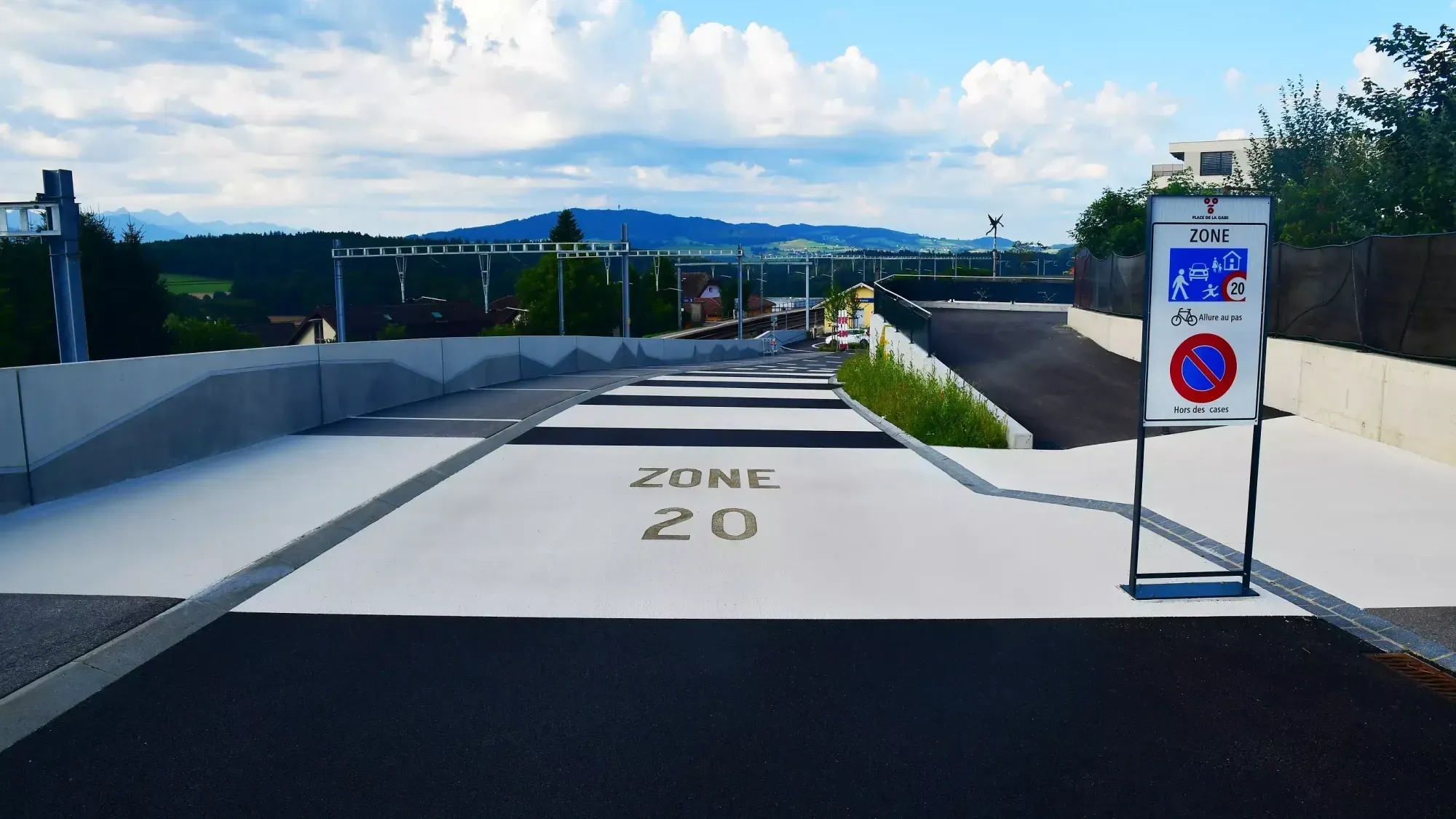
How do I choose a safety road surface based on location and traffic?

There is no one-size-fits-all anti-skid safety surface. Here is an overview of how to select the right one based on location, traffic conditions, and the underlying pavement, including a checklist for road authorities.

How do I choose a safety road surface based on location and traffic?

Safety surface is a thin-layer system applied to an existing asphalt or concrete surface. It improves anti-skid properties, highlights high-risk areas, or visually separates parts of the road (e.g., bike lanes). No single system is suitable for every location. The right choice depends on the specific problem being addressed at the site, the traffic load the surface will bear, and the condition of the underlying pavement.

‍

First the problem, then the technology

Before choosing a product, answer these three questions:

  1. What is the problem at the site? Skidding during braking, poor visibility of a pedestrian crossing or bike lane, accident rates in a curve, or unclear lane markings?
  2. What kind of traffic load will the surface face? Traffic volume and composition (passenger/freight), speed, braking and turning, and winter maintenance.
  3. What is the condition of the substrate, and how long can the road be closed?

The surface is just one measure. It does not solve the root cause of accidents if that cause is, for example, poor road alignment or excessive speed. Therefore, we recommend basing your decision on an analysis of accident data and site conditions, and verifying the results by measuring before and after application (see the article Surface Skid Resistance: PTV and GS).

‍

What each location needs

Requirements Overview
Location Main Requirement Points to Consider
Pedestrian crossing (approach area) Skid resistance during braking, visibility Repeated braking, color contrast
Sharp or downhill curve High skid resistance, long-term stability Polishing by traffic, wet conditions
Intersection, entry and exit ramps Skid resistance + resistance to skidding from braking and acceleration Heavy vehicle traffic load
Cycle path, cycle lane Comfort, clarity, skid resistance, wear resistance Color fastness, smooth transition to surrounding surface
Sidewalk, pedestrian zone, shared space Wet skid resistance, orientation Maintenance, accessibility / barrier-free aspect
Heavy-traffic road Mechanical resistance, UV and chemical stability Load class, durability / service life
Garage, industrial site [TO COMPLETE: if and how WeTraffic addresses this] Chemical exposure, oils

‍

Two basic categories of solutions

For heavy traffic and high-risk areas is designed WeTraffic 492, a structural PMMA system with skid resistance PTV > 65and high mechanical, UV, and chemical resistance.

For slow traffic, pedestrians, and cyclists is designed WeTraffic 491with skid resistance PTV > 45, abrasion resistance, and fast curing.

The article on skid resistance explains the difference between PTV values ​​of 45 and 65. A higher number is not automatically better. It must match the requirements of the location.

‍

Parameters worth including in a tender

Public contracting authorities cannot specify a product name, but they can require specific parameters. For safety surfacing, these are typically:

  • minimum skid resistance value (PTV according to ČSN EN 13036-4) and method and date of its verification,
  • load class or traffic category,
  • type of substrate (asphalt/concrete) and conditions for its preparation,
  • time until traffic loading,
  • resistance to weather, UV radiation, and de-icing agents,
  • requirements for color and color stability.

Always consult the specific wording with your project designer and the public procurement department.

Bezpečnostní protismykový povrch

‍

The condition of the substrate is decisive

No surface can replace a high-quality substrate. Before application, the following are assessed in particular:

  • cohesion and strength of the substrate
  • moisture and cleanliness,
  • local defects (cracks, potholes, loose layers) that must be repaired beforehand,
  • age and condition of the asphalt surface.

WeTraffic can be applied to asphalt and concrete surfaces, provided they are technically suitable and properly prepared.

‍

Application and traffic restrictions

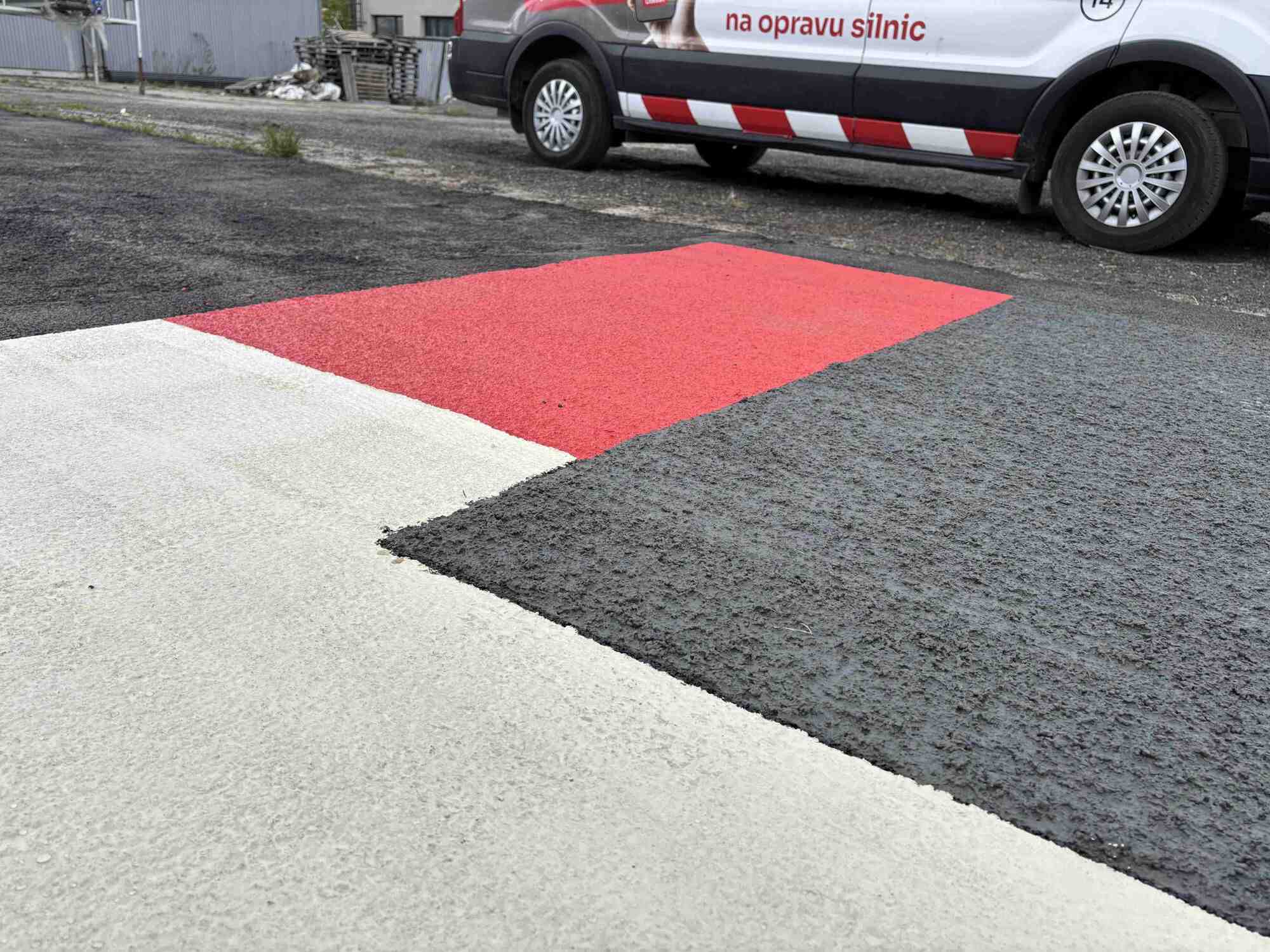
WeTraffic systems feature rapid curing, which minimizes closure time.

Checklist for road administrators
  • Is the problem at the location documented (accidents, measurements, reports)?
  • Is the traffic volume and composition known?
  • Has the condition of the substrate been verified?
  • Has the target skid resistance parameter and the method of its verification been determined?
  • Are measurements planned for before and after application?
  • Has winter maintenance been taken into account?
  • Has the permissible closure duration been established?
Rychlé vytvrzení povrchu WeTraffic

‍

Frequently asked questions

How to choose a safety surface?‍

Based on the location and type of problem (skidding, visibility, spatial differentiation), traffic load, required skid resistance, condition of the substrate, and the time for which the road may be closed.

Can a safety surface be applied to existing asphalt?‍

Yes, provided the asphalt is cohesive and properly prepared after local repairs. WeTraffic systems are designed for both asphalt and concrete surfaces.

Is skid resistance the only criterion?‍

No. Other deciding factors include mechanical resistance, traffic load, durability, resistance to weather and chemicals, color, the condition of the substrate, and the application method.

How do I know if the surface is working?‍

Skid resistance properties are verified through measurements, such as using a pendulum tester, ideally both before and after application.

Is WeTraffic suitable for all types of roads?‍

No, the systems are designed for different uses. WeTraffic 491 is for pedestrians, cyclists, and slow-moving traffic, while WeTraffic 492 is for high-traffic areas.

Read more articles

Articles
Wetraffic offers differentiation or highlighting for different groups of road users for ultimate safety.