

Horizontal road markings must withstand heavy traffic, temperature fluctuations, and adverse weather. Yet, we often see horizontal road markings start to crumble, crack, or lose their functionality after just one winter. In most cases, the problem is not the application, but the material itself.

Clients often ask us how WeTraffic technology differs from standard plastic horizontal road markings (thermoplastics). The basic chemistry may seem similar, but the difference lies in the formula, which determines how the material behaves on the road surface.
Most standard plastic materials are too rigid once cured. Asphalt, however, is a "living" surface—it constantly expands and contracts due to high summer temperatures and winter frosts. Rigid horizontal road markings cannot keep up with these movements, leading to cracks and gradual peeling.
In contrast, the specific PMMA formula used by WeTraffic remains flexible even after curing. The material works in harmony with the surface, significantly reducing cracking and extending the lifespan of the markings. You can learn more about how this technology works in our article PMMA Technology: What is it and why is it changing standards in transport infrastructure?
The difference is also clear when compared to standard horizontal road markings applied plastic or paint. This only creates a thin film on the road surface, which gradually wears away due to traffic.
WeTraffic Technology works on the principle of cold polymerization, where the material chemically bonds into the pores of the substrate. This creates not just a layer on the road, but a functional part of its structure.
The result is higher resistance to mechanical wear, moisture, and frost. This creates a functional surfacethat is firmly bonded to the road and lasts significantly longer than standard coatings.
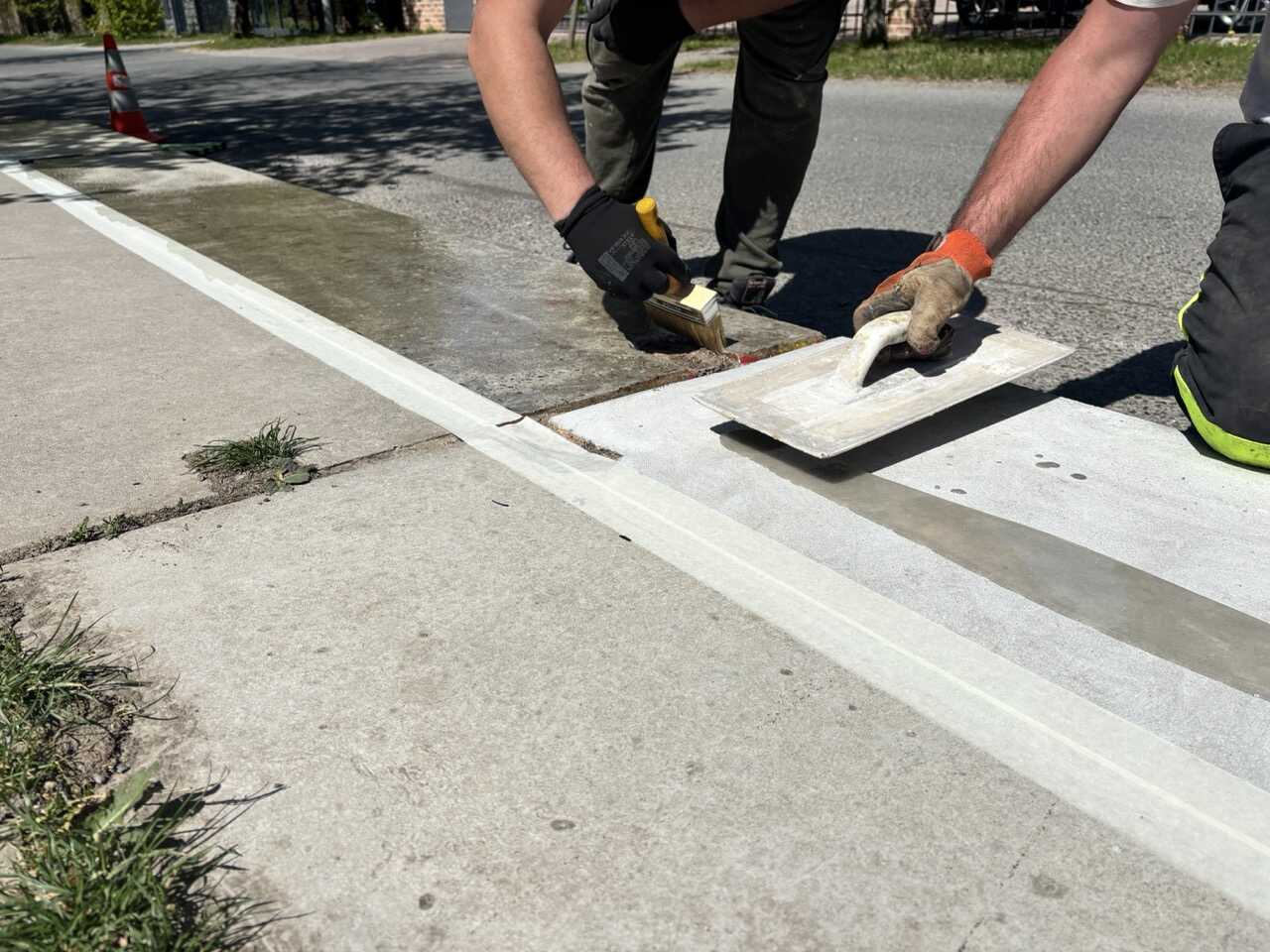
At first glance, standard horizontal road markings may seem like a cheaper solution. However, if they start to crack, water penetrates them, which, during freezing temperatures, damages not only the markings themselves but also the asphalt base.
WeTraffic technology provides a long-term solution that:
In addition to horizontal road markings , PMMA technology is also used for safety surfaces, which increase the anti-skid properties of the road and help improve traffic safety.
Standard plastic markings are significantly more rigid once cured. PMMA retains its flexibility, which allows it to respond better to road movement and results in a longer service life.
The most common cause is a combination of temperature changes, mechanical stress, and material that is too rigid to adapt to the movement of the asphalt surface.
Yes. Although the initial investment may be higher, the longer service life, reduced need for repairs, and greater durability result in lower total lifecycle costs.


