
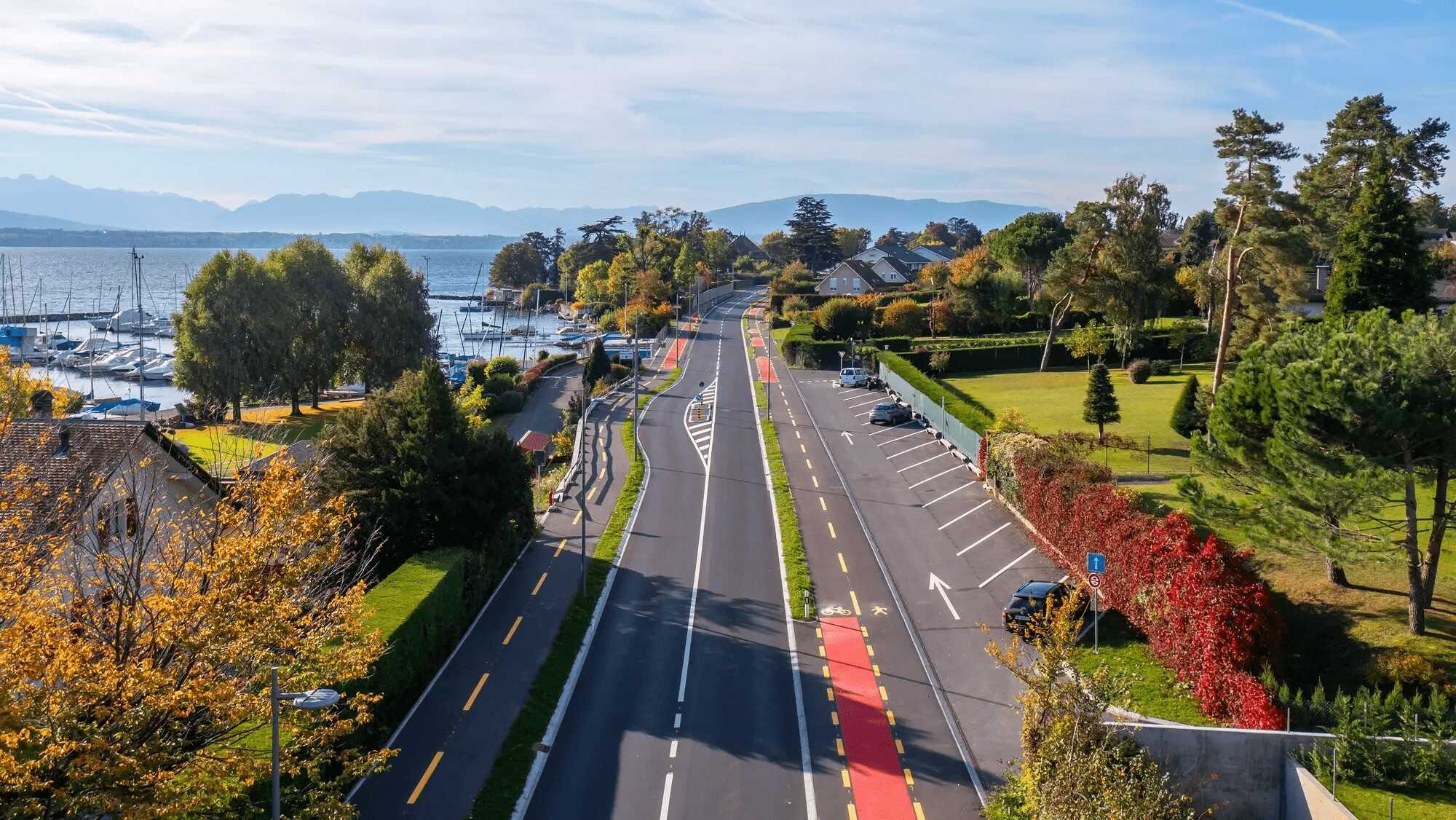
PMMA (polymethyl methacrylate) technology is a modern system based on a two-component reactive resin that undergoes a cold polymerization process after being mixed with a catalyst. This chemical reaction creates a high-strength, durable material that bonds firmly to the substrate, resulting in a long-lasting, functional surface.
Unlike standard paints or certain plastic materials that merely form a layer on the road surface, the PMMA system becomes an integral part of the infrastructure. As a result, it offers high mechanical resistance, rapid curing, and long-term stability of its properties.
Today, PMMA technology is primarily used for the implementation of safety surfaces, horizontal road markings, colored zones and other elements that support traffic safety.
PMMA technology differs from standard materials used for horizontal road markings primarily in how it bonds to the substrate and in the resulting surface properties.
Key advantages include:
PMMA surfaces are designed to withstand heavy traffic, mechanical stress, weather conditions, and long-term wear.
Thanks to its durability, it maintains functionality and appearance for many years, which reduces the need for frequent repairs and resurfacing.
One of the significant features of PMMA technology is the speed of the chemical reaction. Unlike materials that harden through gradual drying or cooling, PMMA cures through controlled polymerization.
This allows for a significant reduction in downtime during repairs or the installation of new safety features.
The specific PMMA formula allows the material to retain a certain degree of elasticity even after curing. This enables it to better respond to the movement of the asphalt substrate caused by temperature changes.
It is this combination of strength and flexibility that helps limit the formation of cracks and peeling.
The main difference lies in how the material functions.
Standard paint only creates a thin film on the road surface, which is gradually subjected to mechanical wear, water, salt, and other external influences.
Standard thermoplastics can be very rigid once cured. If the asphalt substrate expands and contracts due to temperature, cracks can form, leading to damage to the markings.
WeTraffic technology using PMMA works differently.
Thanks to the chemical bond with the substrate, a unified whole is created that better withstands long-term stress.
WeTraffic is therefore not just classic horizontal road markings, but a functional surface that can simultaneously:
One of the most important features of PMMA technology is the way the material bonds with the road surface.
During application, the two-component PMMA mixture is mixed with a catalyst. This triggers a chemical reaction that allows the material to integrate with the pores of the asphalt or concrete.
Unlike standard coatings, this does not just rely on mechanical adhesion, but creates a strong chemical bond.
The chemical bond allows the material to move in sync with the substrate. It does not form a separate, rigid layer that would easily detach as the road surface shifts.
Thanks to the combination of:
the PMMA surface is better able to withstand temperature fluctuations, traffic loads, and long-term wear.
PMMA technology allows the properties of the final surface to be customized for specific applications.
Using various mineral fillers, you can adjust, for example:
This allows for the creation of, for example:
PMMA stands for polymethyl methacrylate. It is a reactive resin used to produce durable surface systems.
The main differences are flexibility, the method of bonding to the substrate, and overall durability. PMMA creates a chemical bond with the substrate and responds better to road movement.
Yes. PMMA technology allows for the creation of durable horizontal road markings as well as more complex safety surfaces with enhanced functional properties.
The service life depends on the specific application, traffic intensity, and proper system design. However, thanks to their high durability, PMMA surfaces are among the long-term solutions for transport infrastructure.

