
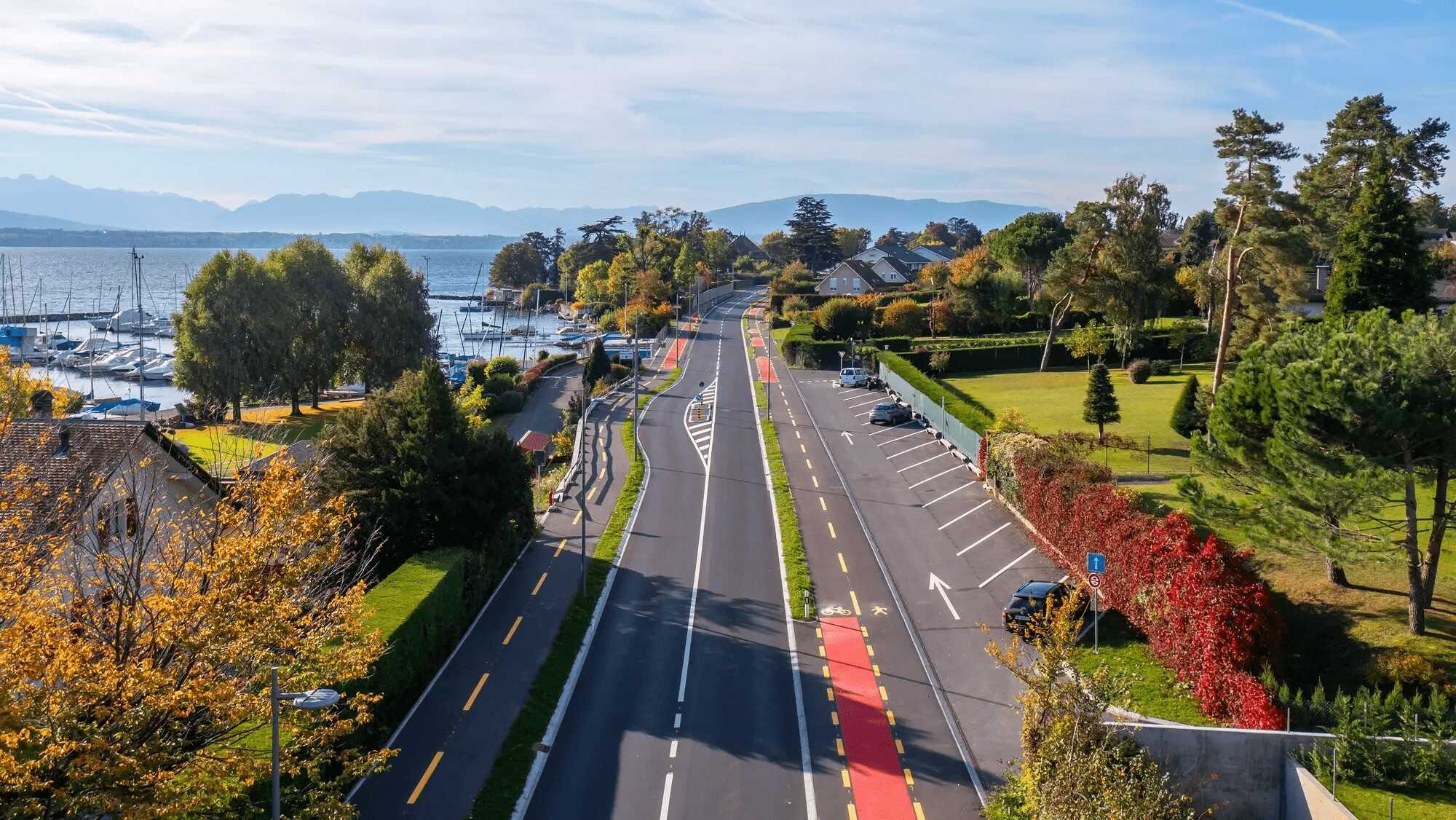
Application of the WeTraffic safety surface is carried out directly on the existing road surface and consists of several precisely defined steps – from surface preparation and PMMA layer application to the final adjustment of anti-skid properties.
Thanks to cold-curing PMMA technology, durable traffic surfaces can be installed with minimal traffic disruption. A properly designed and applied WeTraffic system offers a long service life, high resistance to mechanical stress, and low maintenance requirements.
The installation of the WeTraffic safety surface consists of several basic steps.
High-quality surface preparation is key to ensuring a proper bond between the PMMA material and the road.
Before the actual application, the surface is:
A properly prepared surface allows for the creation of a strong chemical bond between the PMMA system and the road surface.
The two-component WeTraffic PMMA mixture is prepared directly on-site by mixing the resin with a catalyst.
The material is then manually applied using squeegees to the required thickness, depending on the specific use.
This application method allows for precise adjustment of the final surface properties, such as color, texture, or anti-slip parameters.
A full-surface saturated broadcast of mineral filler is applied to the freshly laid PMMA layer.
Natural bauxite filler is most commonly used, which determines the final texture and anti-slip properties of the surface.
The result is a functional safety surface suitable for roads with high requirements for safety and durability.
One of the main advantages of PMMA technology is the very rapid curing of the material.
Standard coatings harden primarily through solvent evaporation, and asphalt mixtures through cooling. These processes can be significantly affected by the weather.
WeTraffic technology works on the principle of cold polymerization, which involves a rapid chemical reaction throughout the entire volume of the material.
Once application is complete, the surface is ready for traffic in just 60 minutes.
This speed allows for:
WeTraffic technology is suitable for various types of roads and traffic areas. It is most commonly applied to asphalt and concrete surfaces.
Asphalt is one of the most common substrates for the application of PMMA systems.
Thanks to the material's flexibility, WeTraffic can adapt to the natural movements of the asphalt substrate caused, for example, by temperature changes.
Application is also possible on concrete surfaces, such as:
However, concrete substrates require specific preparation, such as mechanical surface cleaning and the application of a suitable primer.
Thin-layer systems can help stabilize minor surface irregularities and micro-cracks, thereby limiting the potential for water to penetrate the substrate structure.
Service life of safety surfaces depends on the specific application, traffic intensity, condition of the substrate, and proper system design.
However, thanks to the properties of PMMA technology, WeTraffic offers high durability even in demanding conditions.
The chemical bond with the substrate creates a stable surface that resists:
The surface forms a compact unit with the substrate. As a result, there is no risk of easy peeling during standard road winter maintenance.
PMMA material is resistant to common traffic-related influences, such as:
This helps maintain surface functionality without the need for frequent repairs.
The installation time depends on the size of the area and specific conditions. Thanks to the rapid curing of PMMA traffic disruption can be significantly reduced.
The surface is ready for traffic just 60 minutes after application is complete.
It is most commonly applied to asphalt and concrete. However, every surface requires proper preparation before the actual installation.
Thanks to its high mechanical and chemical resistance, routine maintenance requirements are minimal. However, regular inspection of the surface condition is recommended, just as with any other traffic area.

